
 Facebook
 X
 Pinterest
 Copy Link

Maryland Eastern Shore Real Estate Market Report
More Choices for Buyers, New Pricing Challenges for Sellers, and a Market Finding Its Balance
Coldwell Banker Chesapeake Real Estate Company | September 2026 Market Review
The housing market entered fall 2026 facing a new set of challenges. Rising mortgage rates, changing buyer expectations, and increasing inventory are reshaping real estate activity nationwide. But on Maryland’s Eastern Shore, the story is more nuanced.
Across Cecil, Kent, Queen Anne’s, Caroline, Talbot, and Dorchester counties, September brought continued residential sales activity, additional housing choices, and signs of a market in which pricing, presentation, and local expertise matter more than ever.
Market Pulse is Coldwell Banker Chesapeake Real Estate Company’s monthly real estate market report, curated by Hugh M. Smith, Broker. This edition combines September 2026 Bright MLS statistics with national housing research and industry reporting to explain what current conditions mean for Eastern Shore home buyers, sellers, and real estate professionals.
September 2026 Housing Market Highlights
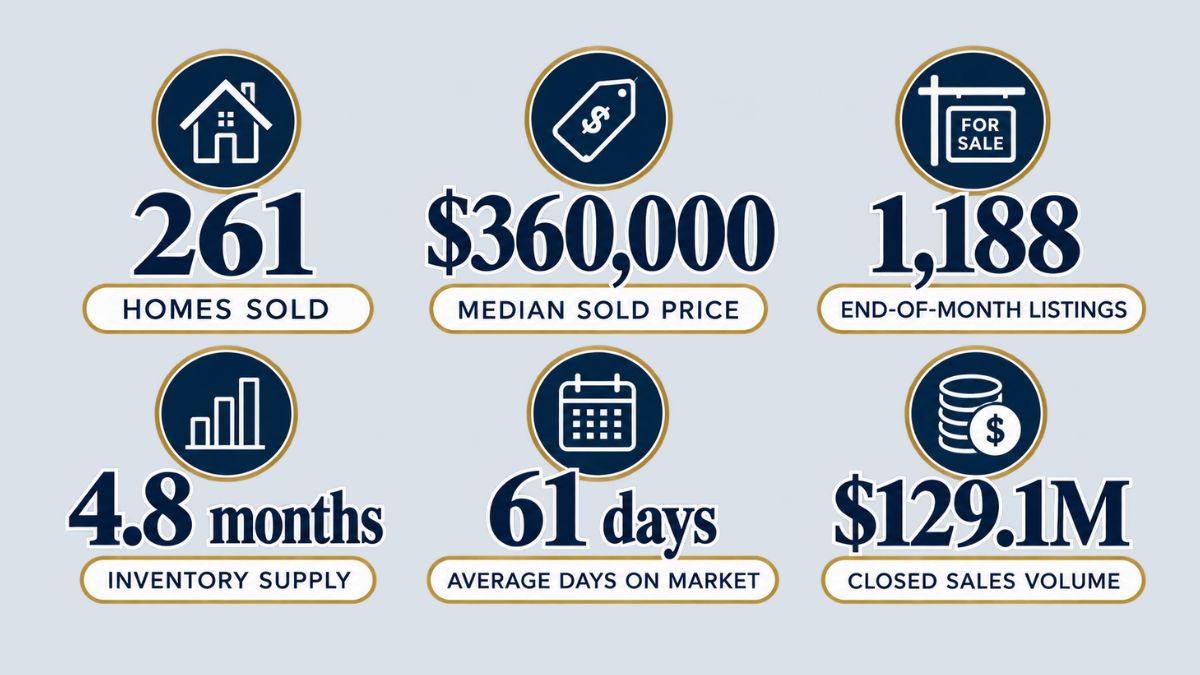
- 261 homes sold across the six-county Eastern Shore region.
- $129.1 million in total residential sales volume.
- $360,000 median sold price, with an average sold price of approximately $494,721.
- 360 new residential listings entered the market.
- 1,188 active listings remained at the end of September.
- 4.8 months of inventory, suggesting a market moving toward greater balance.
- 61 average days on market, with a 69-day cumulative average.
- 154 pending sales recorded during September.
Source: Bright MLS, September 2026 residential market statistics for Cecil, Kent, Queen Anne’s, Caroline, Talbot, and Dorchester counties.
National Housing Market Update: Buyers Gain Negotiating Power as Mortgage Rates Rise
The national housing market experienced significant changes during September as mortgage rates moved higher and affordability challenges continued to influence purchasing decisions.
According to Redfin’s September 17 housing market report, pending home sales declined 3.5% from the previous week, reaching their lowest level in nearly three years. Nationally, the median sale price remained approximately 2% above the previous year, demonstrating that slower buyer activity does not necessarily translate into widespread price declines.
The report also identified an important shift: buyers who remained active were encountering less competition and more opportunities to negotiate.
Meanwhile, Compass International Holdings’ September economic research reported mortgage rates approaching 7.25%, with higher borrowing costs weighing particularly heavily on lower-priced housing segments.
The combination of elevated mortgage rates and increasing inventory is creating a more selective buyer pool.
For sellers, the message is becoming increasingly clear: pricing a property based on what neighboring homes achieved during a stronger market may no longer produce the desired results.
Inman reported that approximately 21.1% of U.S. home sellers reduced their asking prices during September, the highest September share since 2018.
These national trends point toward a housing market in which realistic expectations and informed negotiations are essential.
Maryland Housing Market Update: Affordability Remains a Central Challenge
Maryland continues to experience the effects of changing mortgage rates, limited affordability, and shifting inventory.
According to Realtor.com’s September 2026 statewide market data, Maryland recorded approximately 28,743 active listings, an increase of 9.69% from the previous year.
The statewide median listing price was approximately $425,000, down 5.35% year over year, while the median sold price reached approximately $435,000, up 1.16%.
This distinction is important. Lower asking prices do not automatically mean that all homes are losing value. Listing-price trends can reflect changes in the types of homes available, seller expectations, and local market conditions.
Maryland’s median time on market also increased, reaching approximately 46 days in September.
Together, these indicators suggest that buyers are becoming more deliberate and sellers must pay closer attention to the competition.
However, Maryland is not one uniform housing market. Conditions in the Baltimore-Washington corridor can differ significantly from those along the Chesapeake Bay and throughout the rural Eastern Shore.
Maryland Eastern Shore Housing Market: A More Balanced Environment Emerges
September’s Bright MLS statistics provide a clearer picture of how the local housing market is performing.
Across the six counties served by Coldwell Banker Chesapeake, 261 residential properties closed during September, generating $129,122,224 in total sales volume.
The median sold price was $360,000, while the average sold price was approximately $494,721.
The difference between these figures reflects the influence of higher-priced transactions on the regional average. Waterfront homes, larger properties, and luxury residences can contribute significantly to total sales volume, even when most transactions occur at more moderate price points.
More Inventory Creates More Choices
At the end of September, 1,188 residential properties were available for sale across the region.
The market recorded 360 new listings during the month and approximately 4.8 months of available inventory.
Months of inventory estimates how long the current supply of homes would take to sell at the prevailing sales pace if no additional properties were listed.
A market with approximately four to six months of supply is often considered relatively balanced, although conditions can vary substantially by price range and community.
For Eastern Shore buyers, this inventory level may mean more opportunities to compare homes, evaluate condition, and negotiate terms.
For sellers, it means a property must compete effectively against other available listings.
Homes Are Taking Time to Sell
The September report recorded an average of 61 days on market and 69 cumulative days on market.
These figures emphasize the importance of entering the market with a thoughtful strategy.
Homes that are accurately priced, professionally presented, and effectively marketed may still attract strong interest. However, properties that begin with unrealistic asking prices or require substantial improvements may encounter longer marketing periods.
Pending Sales Show Continued Buyer Activity
September recorded 154 pending residential sales across the region.
While higher borrowing costs may discourage some potential buyers, the pending-sales activity demonstrates that transactions are still moving forward.
Importantly, pending contracts and closed sales represent different stages of the transaction process and should not be compared as though they measure the same group of homes.
A Closer Look at Maryland’s Eastern Shore Communities
One of the most important lessons of the current housing market is that real estate conditions can change dramatically from one community to another.
Kent County: Chestertown, Rock Hall, Betterton, and surrounding communities offer historic homes, waterfront properties, rural acreage, and established neighborhoods. Pricing and demand can vary considerably between in-town properties and waterfront or agricultural estates.
Queen Anne’s County: Stevensville, Chester, Kent Island, Centreville, and surrounding communities attract buyers with a variety of housing needs, including those seeking Chesapeake Bay access or proximity to the Annapolis and Washington metropolitan areas.
Talbot County: Easton, St. Michaels, Oxford, and nearby communities offer historic residences, established neighborhoods, and distinctive waterfront properties. Luxury and waterfront transactions can significantly influence local averages.
Caroline County: Denton, Federalsburg, Greensboro, and surrounding areas provide a range of residential and rural housing opportunities. Buyers may find different price points and property configurations than in some waterfront-oriented markets.
Dorchester County: Cambridge, Hurlock, and surrounding communities offer historic properties, waterfront access, rural homes, and investment opportunities. Property condition and location remain important considerations.
Cecil County: Elkton, North East, Chesapeake City, and surrounding communities benefit from their location near Delaware and southeastern Pennsylvania, attracting buyers with diverse commuting and lifestyle needs.
These community descriptions are not county-specific statistical rankings. Individual county and neighborhood data should be reviewed before making pricing or purchasing decisions.
What September’s Market Means for Eastern Shore Home Buyers
For buyers, a slower and more selective market can create opportunities.
Additional inventory means buyers may have more time to compare homes and evaluate whether a property meets their financial and lifestyle goals.
However, mortgage rates remain an important part of the affordability equation.
A buyer considering a $400,000 home with a 20% down payment would finance approximately $320,000. At a hypothetical 6.5% fixed rate, principal and interest would be approximately $2,023 per month. At 7.25%, that payment increases to approximately $2,183.
That difference of roughly $160 per month illustrates why financing conditions continue to influence purchasing decisions. These examples exclude taxes, insurance, and other ownership expenses.
Buyers should consider:
- Obtaining current mortgage preapproval and reviewing multiple financing options.
- Comparing recent closed sales with active listings and asking prices.
- Evaluating how long a property has been available and whether its price has changed.
- Reviewing property taxes, homeowners insurance, flood insurance, and maintenance expenses.
- Investigating wells, septic systems, easements, shoreline restrictions, and Critical Area requirements when applicable.
The goal is not simply to purchase a home at a lower price. It is to make a sound long-term decision based on the total cost of ownership.
What September’s Market Means for Eastern Shore Home Sellers
The market is sending a consistent message to homeowners considering a sale: strategic pricing matters.
With more properties competing for buyer attention, sellers can no longer assume that limited inventory alone will generate immediate offers.
National research from Redfin and Inman demonstrates that price reductions are becoming increasingly common as sellers respond to buyer expectations.
Locally, September’s average marketing time reinforces the need to establish a competitive position from the beginning.
Successful sellers should focus on three priorities.
1. Price According to Today’s Market
A property’s asking price should reflect current comparable sales, competing listings, condition, location, and buyer demand.
Pricing above the market can reduce early interest and lead to longer marketing periods.
2. Make the First Impression Count
Professional photography, accurate property descriptions, thoughtful preparation, and a strong digital presentation can help distinguish a home from competing listings.
For waterfront, historic, and luxury properties, marketing should also communicate the features that make the property distinctive.
3. Evaluate Feedback and Adjust When Necessary
Showing activity, online engagement, buyer comments, and competing listings can provide valuable information.
Sellers who respond to market feedback may be better positioned than those who wait until a listing becomes stale.
Luxury, Waterfront, and Rural Properties: A Market Within a Market
Maryland’s Eastern Shore offers property categories that are not easily compared with traditional suburban housing.
Waterfront estates, historic homes, working farms, and larger rural properties often appeal to specialized buyers.
Property value may depend on factors such as water depth, navigability, shoreline condition, acreage, conservation restrictions, improvements, and permitted uses.
These properties may also require more specialized inspections and longer marketing timelines.
PropertyShark’s national research on luxury real estate illustrates how dramatically high-end housing markets can differ from broader market averages. While its September and October research is not specific to the Eastern Shore, it reinforces the importance of evaluating specialized property segments separately.
For sellers of distinctive Eastern Shore properties, broad regional averages should be treated as context rather than a substitute for a property-specific valuation.
What the Market Means for Real Estate Professionals
September’s housing data highlights the growing importance of local market interpretation.
Consumers have access to extensive information about listings, pricing, mortgage rates, and national real estate trends. What they often need is assistance understanding how those trends apply to a specific property or community.
Real estate professionals must be prepared to explain the relationship between inventory, pricing, marketing time, and buyer activity.
They must also help clients distinguish national headlines from local conditions.
Compass research published in September emphasized that housing markets are behaving differently across the country, with inventory and demand responding to local economic conditions.
That observation is particularly relevant on Maryland’s Eastern Shore, where waterfront properties, historic towns, rural acreage, and commuter-oriented communities can experience very different market dynamics.
Technology can help consumers research properties and understand trends, but local expertise remains essential when evaluating property condition, pricing, negotiation strategies, and transaction risks.
Looking Ahead: Maryland Eastern Shore Housing Market Outlook for Late 2026
As the Eastern Shore moves into the final months of 2026, several factors deserve close attention.
Mortgage Rates: Higher borrowing costs may continue to limit purchasing power, particularly for first-time and move-up buyers.
Housing Inventory: The September supply of 4.8 months suggests a market approaching balance. Additional inventory could create more competition among sellers, while a seasonal reduction in listings could change the picture.
Buyer Demand: Pending-sales activity will be an important indicator of whether buyers continue moving forward despite affordability challenges.
Pricing Strategy: Sellers may need to place greater emphasis on current comparable sales rather than expectations formed during earlier market conditions.
Seasonal Opportunities: Fall and early winter may provide opportunities for motivated buyers and sellers, although seasonal activity varies by community and property type.
Property-Specific Costs: Insurance, maintenance, financing, and waterfront-related expenses will remain important considerations throughout the Chesapeake Bay region.
The outlook is not necessarily one of dramatic price declines or rapid appreciation.
Instead, the data points toward a market that is becoming more selective, more dependent on local conditions, and increasingly influenced by affordability.
For buyers and sellers, informed decisions will matter more than trying to predict the perfect moment to enter the market.
Frequently Asked Questions About the September 2026 Eastern Shore Housing Market
Is Maryland’s Eastern Shore becoming a buyer’s market?
September’s 4.8 months of residential inventory suggests a market moving toward balance rather than a clear buyer’s market. Some neighborhoods and property categories may offer buyers more negotiating power than others.
What was the median home sale price on Maryland’s Eastern Shore in September 2026?
The median residential sold price was $360,000 across Cecil, Kent, Queen Anne’s, Caroline, Talbot, and Dorchester counties, according to Bright MLS.
How many homes sold on Maryland’s Eastern Shore in September 2026?
A total of 261 residential properties closed during September, representing approximately $129.1 million in sales volume.
How long does it take to sell a home on Maryland’s Eastern Shore?
The September regional average was 61 days on market, with a cumulative average of 69 days. Actual marketing times vary by location, property condition, price range, and other factors.
Should I wait until spring 2027 to sell my home?
There is no universal answer. Waiting may bring a different pool of buyers and competing listings, but it does not guarantee higher prices or lower mortgage rates. A local market analysis can help homeowners evaluate their options.
Are waterfront properties still in demand?
Waterfront properties remain a distinctive segment of the Eastern Shore market, but the September regional report does not isolate waterfront sales or establish whether demand increased or decreased. Buyers and sellers should review comparable waterfront transactions within their specific community.
Take the Next Step with Coldwell Banker Chesapeake Real Estate Company
Whether you are purchasing your first home, preparing to sell, relocating to Maryland’s Eastern Shore, or exploring waterfront and luxury real estate, understanding the local market is an important first step.
At Coldwell Banker Chesapeake Real Estate Company, our professionals combine local knowledge, market research, and comprehensive marketing resources to help buyers and sellers make informed decisions.
From Chestertown and Rock Hall to Easton, St. Michaels, Stevensville, Centreville, Cambridge, and communities throughout the region, our team is here to help you navigate today’s changing real estate market.
Your Home. Your Future. Our Expertise.
Visit www.cbchesapeake.com to explore available properties and connect with a local real estate professional.
About Market Pulse
Market Pulse is a monthly housing market report curated by Hugh M. Smith, Broker and Owner of Coldwell Banker Chesapeake Real Estate Company.
The report combines national housing research, industry reporting, and local market statistics to provide useful insights for buyers, sellers, investors, and real estate professionals throughout Maryland’s Eastern Shore and surrounding markets.
About the Author
Hugh M. Smith is Broker and Owner of Coldwell Banker Chesapeake Real Estate Company. With more than four decades of real estate experience, Hugh provides market analysis, professional training, and strategic guidance to real estate consumers and professionals.
Sources and Data References
- Bright MLS — September 2026 residential market statistics, six-county Maryland Eastern Shore region, report dated October 21, 2026.
- Redfin Real Estate News — Pending Home Sales Dip to Lowest Level in Nearly 3 Years, September 17, 2026.
- Compass International Holdings Market Research — Monthly Economic Summary: September 2026, September 25, 2026.
- Inman — Homesellers Slash Prices at Highest September Rate in Years, September 30, 2026.
- Inman — Home Sales Stuck Under 4M as Inventory Hits Pre-Pandemic Levels, October 13, 2026.
- Realtor.com Economic Research — Maryland Housing Market Trends, September 2026.
Housing statistics reflect information available as of October 21, 2026. National and statewide data may use different methodologies, reporting periods, and property categories than the local Bright MLS statistics. Market conditions vary by county, town, neighborhood, property type, and price range. This report is for informational purposes and does not constitute financial, legal, or lending advice.
