
 Facebook
 X
X
 Pinterest
 Copy Link
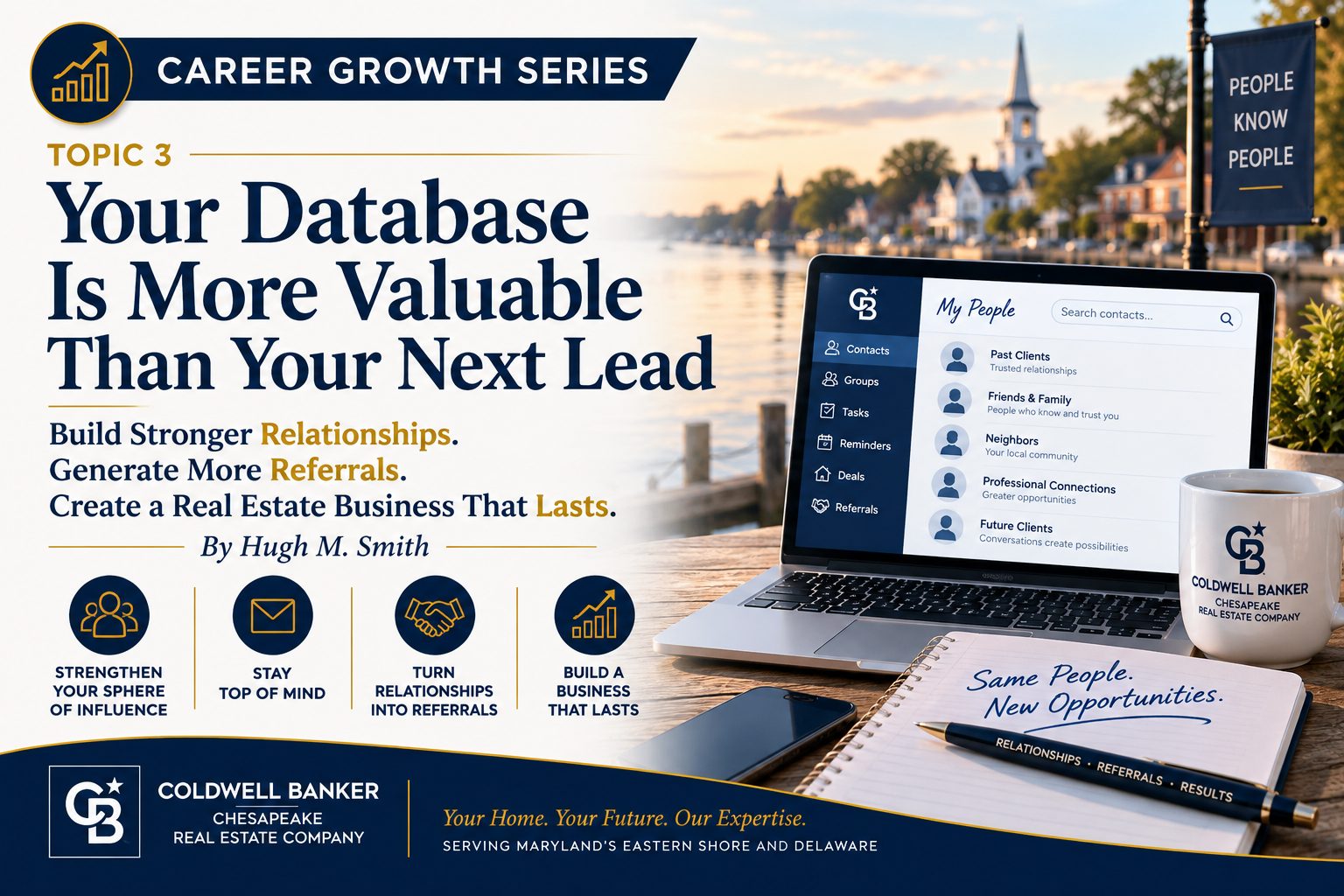
Your Real Estate Database Is More Valuable Than Your Next Lead
If you are relatively new to real estate—or have been in the business for a while but haven’t gained the traction you expected—it is easy to assume that what you need is more leads.
Maybe you need Zillow leads. Facebook leads. Google leads. Internet leads. More open-house leads.
Maybe.
But before spending another dollar looking for strangers, take a hard look at the people you already know.
Your real estate database may be the most valuable business asset you have.
Key Takeaway: Relationships Build Long-Term Real Estate Businesses
A strong real estate database does more than organize contacts. It helps agents stay connected to past clients, prospects, friends, family members, neighbors, community contacts and other people who may eventually become clients—or introduce an agent to someone who does.
Purchased leads can supplement a prospecting strategy, but consistent relationship-building creates an asset that can continue producing referrals and future business for years.
Why Constantly Chasing the Next Real Estate Lead Can Limit Your Growth
New agents often approach real estate one transaction at a time.
Find a prospect. Work the prospect. Hopefully close the transaction. Collect a commission. Then start looking for the next prospect.
That is an exhausting way to build a career because you are continually starting over.
Successful agents eventually make an important transition: they stop thinking only about transactions and start building relationships that produce transactions.
That is where your database comes in.
Your database isn’t simply a list of names, phone numbers and email addresses. It includes:
- Past clients
- Current prospects
- Friends and family members
- Neighbors
- Former coworkers
- Local business owners
- People you meet at open houses
- Community connections
- Virtually everyone who knows who you are and what you do
Every one of those people has a sphere of influence of their own.
Your Sphere of Influence May Include More Real Estate Prospects Than You Think
Suppose you have only 200 people in your database.
You don’t need all 200 to buy or sell a house this year. You need them to remember you when someone they know mentions real estate.
Think about the conversations happening every day:
“We’re thinking about moving to Easton.”
“My parents may finally sell their house.”
“Do you know anybody who really understands waterfront property?”
“My daughter and her husband want to buy their first home.”
“We’re thinking about retiring to Delaware.”
The question is simple:
When that conversation occurs, will somebody in your database think of you?
That doesn’t happen by accident.
How Real Estate Agents Can Build and Work Their Database
Putting 500 contacts into a CRM doesn’t automatically create a referral business.
Relationships require attention.
A productive real estate database strategy doesn’t mean constantly asking people whether they are ready to buy or sell. In fact, that can quickly become annoying.
Instead, give people reasons to hear from you.
Share useful information about their local real estate market. Explain what is happening with inventory, home prices and mortgage rates. Send an interesting article. Congratulate them on a milestone. Call occasionally without asking for anything. Invite them to an event. Share something relevant about their community.
Provide value before asking for business.
The objective is not to become the person who is always trying to sell them something.
The objective is to become their real estate person.
Local Real Estate Knowledge Is a Competitive Advantage
This is particularly important in highly local markets such as Maryland’s Eastern Shore and Delaware.
Our markets are remarkably local. Easton isn’t Chestertown. Kent Island isn’t Cambridge. Talbot County waterfront isn’t the same market as Cecil County waterfront. Sussex County isn’t Kent County.
An agent who consistently demonstrates genuine knowledge of a particular community can become a valuable resource for buyers, sellers and homeowners.
You don’t need 20 years of experience to start doing that.
Build your local real estate knowledge by:
- Studying current inventory
- Touring listings
- Attending inspections
- Learning neighborhoods and communities
- Following price reductions
- Studying closed sales
- Talking with lenders, inspectors and settlement professionals
- Paying attention to the questions buyers and sellers are asking
Then share what you learn.
You can start becoming known as a local real estate expert long before you become a top producer.
AI Makes Your Real Estate Reputation Even More Important
There is another reason to begin building your professional presence now.
Consumers are changing how they search for real estate professionals.
Instead of simply typing “Easton real estate agent” into a traditional search engine, consumers increasingly can ask AI-powered tools more specific questions, such as:
- Who is a good real estate agent for a first-time buyer in Easton?
- Which agents specialize in waterfront homes on Maryland’s Eastern Shore?
- Who knows the Chestertown real estate market?
- Who should I call about relocating to coastal Delaware?
AI doesn’t eliminate the importance of relationships and reputation. It potentially magnifies them.
Agents who consistently publish useful information, demonstrate local expertise, develop a recognizable professional presence and earn the trust of clients are building a body of evidence about who they are and what they know.
The technology is new.
The underlying principle isn’t.
People do business with people they know, trust and believe are competent.
How New Real Estate Agents Can Start a Database With 100 People
If your database is disorganized—or practically nonexistent—don’t make this complicated.
Start with 100 people who know you.
Then develop a simple and repeatable system:
- Keep accurate contact information in your CRM.
- Add notes after meaningful conversations.
- Contact people consistently rather than randomly.
- Share useful local real estate information.
- Stay connected after the transaction closes.
- Ask satisfied clients for reviews and referrals.
- Add new relationships every week.
- Track where your business actually comes from.
Do this consistently for several years and something important begins to happen.
Your business starts producing its own business.
A buyer becomes a homeowner. The homeowner refers a coworker. The coworker buys a house and later becomes a seller. That seller introduces you to a neighbor.
One relationship can produce multiple transactions over the course of a real estate career.
That is very different from buying a lead, closing a transaction and never speaking to that person again.
Build a Real Estate Business Asset, Not Just a Lead Pipeline
At Coldwell Banker Chesapeake Real Estate, our North Star is helping agents become more productive and build profitable businesses.
That distinction matters.
Generating another lead may help you close another transaction.
Building a database helps you build a business.
There is nothing wrong with purchased leads. They can be an important part of an agent’s prospecting strategy. But purchased leads should supplement the business you are building—not become the business.
If you’re struggling to gain traction, don’t automatically assume the answer is spending more money to put more strangers into the top of your sales funnel.
Open your CRM.
Look at the people you already know.
Call five of them today.
Then do it again tomorrow.
Because the most valuable real estate lead you generate this year may come from someone who is already in your phone.
Frequently Asked Questions About Building a Real Estate Database
Why is a real estate database important?
A real estate database helps agents maintain relationships with past clients, prospects and members of their sphere of influence. Consistent communication can lead to repeat business, referrals and introductions to future buyers and sellers.
How many people should a new real estate agent have in their database?
There is no single required number. If your database is small or disorganized, start with 100 people who already know you. Focus on accurate contact information, meaningful notes and consistent communication before worrying about building a massive list.
Who should be included in a real estate agent’s database?
A database can include past clients, current prospects, friends, family members, neighbors, former coworkers, local business owners, open-house visitors and other people who know who you are and what you do.
How should real estate agents stay in touch with their database?
Provide useful information rather than constantly asking for business. Share local market updates, community information, pricing and inventory trends, helpful articles and relevant real estate insights. Agents can also make personal calls, recognize important milestones and invite people to local events.
Are purchased real estate leads worth it?
Purchased leads can be a useful part of a broader prospecting strategy. However, they should supplement the relationships and referral business an agent is building rather than becoming the entire foundation of the business.
How does local expertise help real estate agents generate referrals?
Agents who consistently demonstrate knowledge of their communities can become trusted local resources. Studying inventory, neighborhoods, closed sales, price changes and local market conditions gives agents useful information they can share with their database and prospective clients.
How is AI changing the way consumers find real estate agents?
Consumers can increasingly use AI-powered tools to ask detailed questions about real estate agents, specialties and local markets. A consistent professional presence, useful local content, client trust and demonstrated expertise can help establish a stronger reputation both online and within the community.
Keep Moving Your Real Estate Career Forward
A strong database is not built in a day. It grows through consistent communication, local expertise, good service and relationships that continue long after a transaction closes.
For agents in the early stages of their careers, creating those habits now can help build a more productive, profitable and sustainable real estate business for years to come.
About the Author
